Changing Divisions in Europe and the Asia-Pacific: A New Cold War? 30-31 January 2025 University of Canterbury, Christchurch, New Zealand
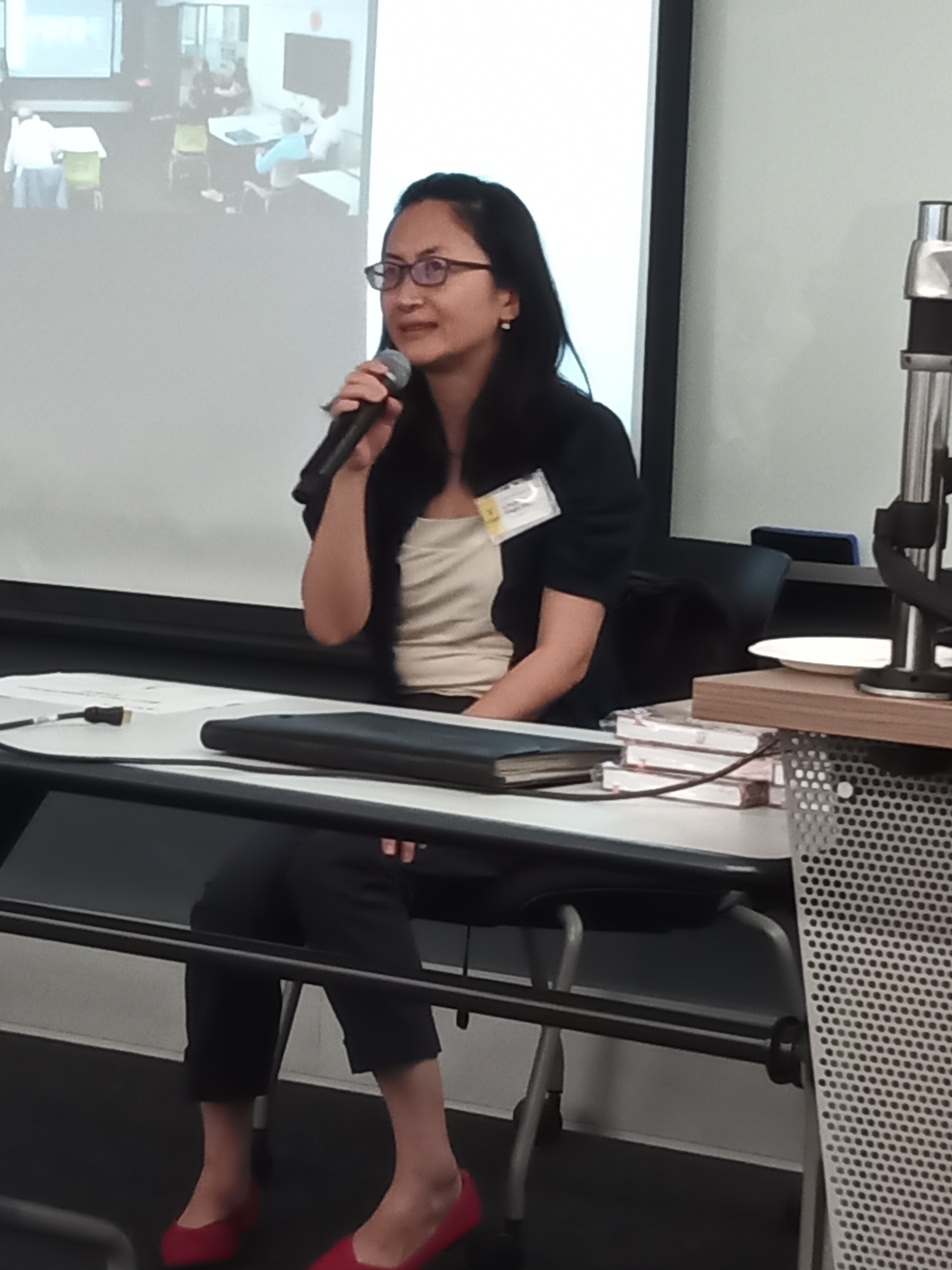
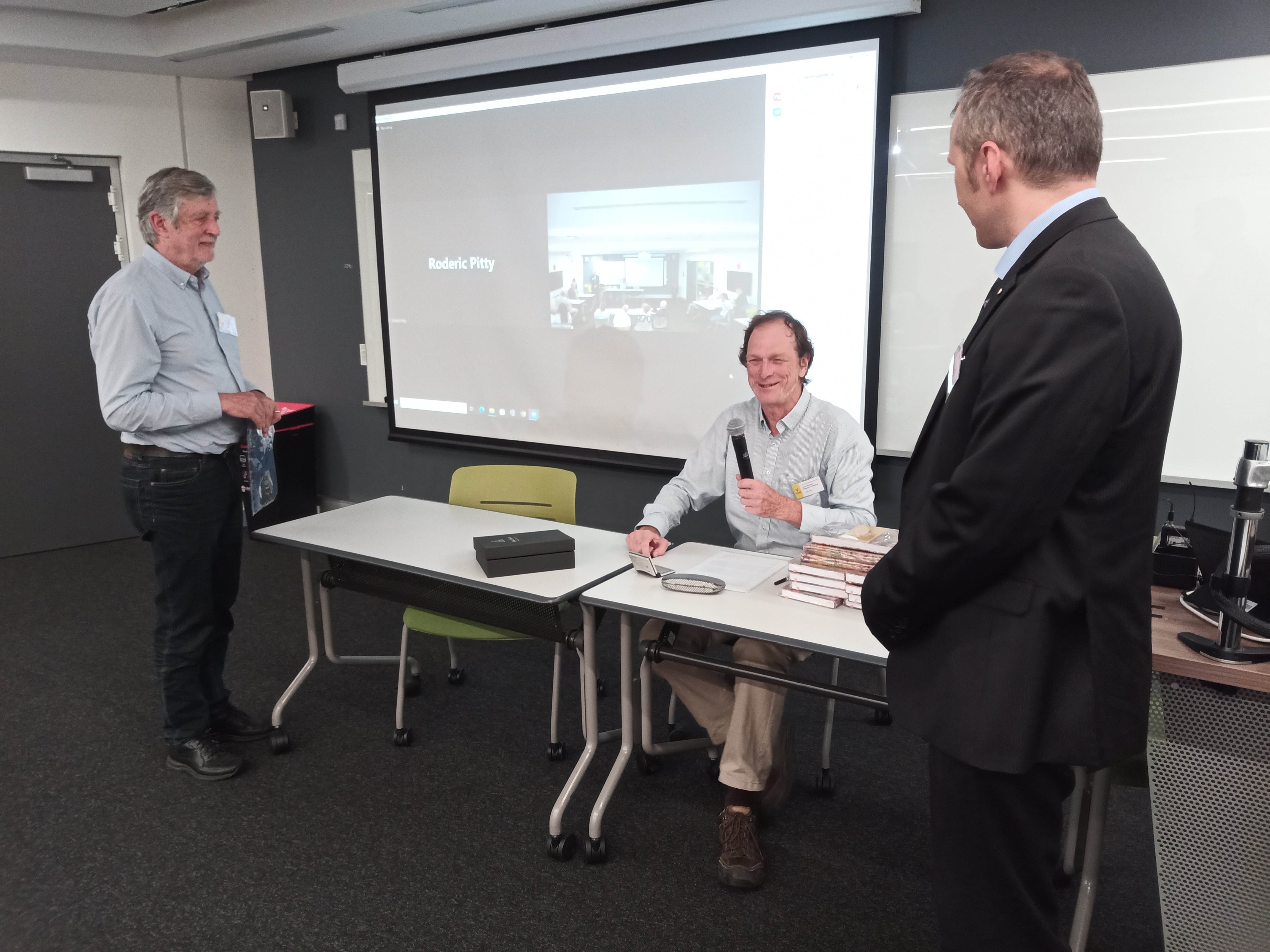
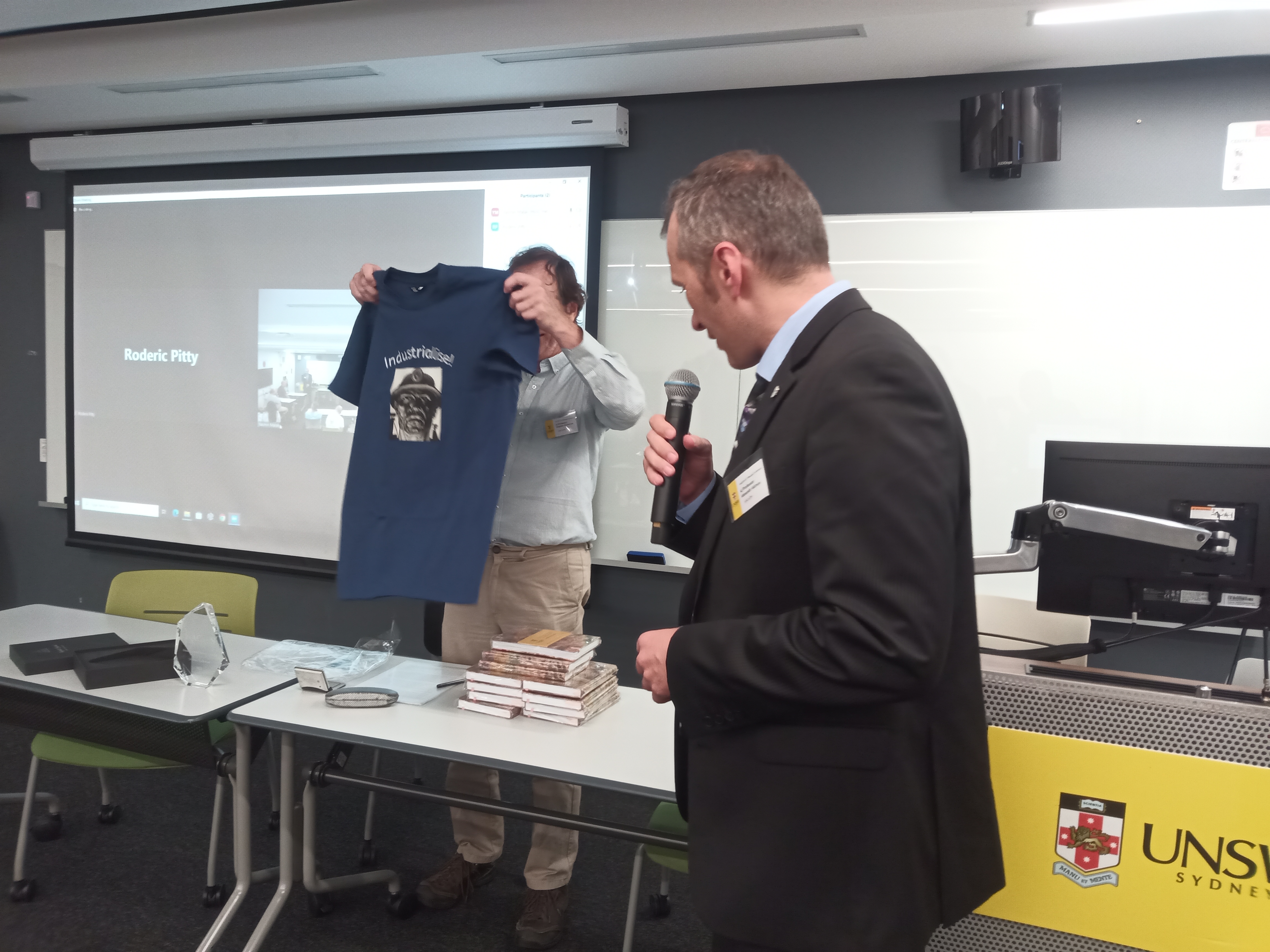
The Australasian Association for Communist and Post-Communist Studies (AACaPS) and the Australian and New Zealand Slavists’ Association (ANZSA) hosted the 2025 international conference, bringing together over 60 distinguished scholars, researchers, and practitioners from Australia, New Zealand, Europe, and Asia. The event was graciously hosted and sponsored by the National Centre for Research on Europe at the University of Canterbury, the Faculty of Arts, and the EU’s Jean Monnet Chair.
Conference Overview
The 2025 conference focused on geopolitical, socio-political, and cultural divisions in Europe and the Asia-Pacific, exploring the resurgence of East-West tensions in the wake of Russia’s invasion of Ukraine and growing confrontations between China and Western democracies. Scholars examined how these divisions impact global governance, security, migration, and economic stability.
Key Highlights
Keynote Address
The keynote address was delivered by Dr. Dimitar Bechev (University of Oxford), titled Whither EU Enlargement? Reflections on the Union’s Expansion at a Time of War. His address examined the evolving EU integration process and how war, economic instability, and political stagnation influence future enlargement policies. His insights on alternative integration mechanisms for aspiring EU members sparked rigorous discussions.
Roundtable: The Future of Euro-Asian Divisions
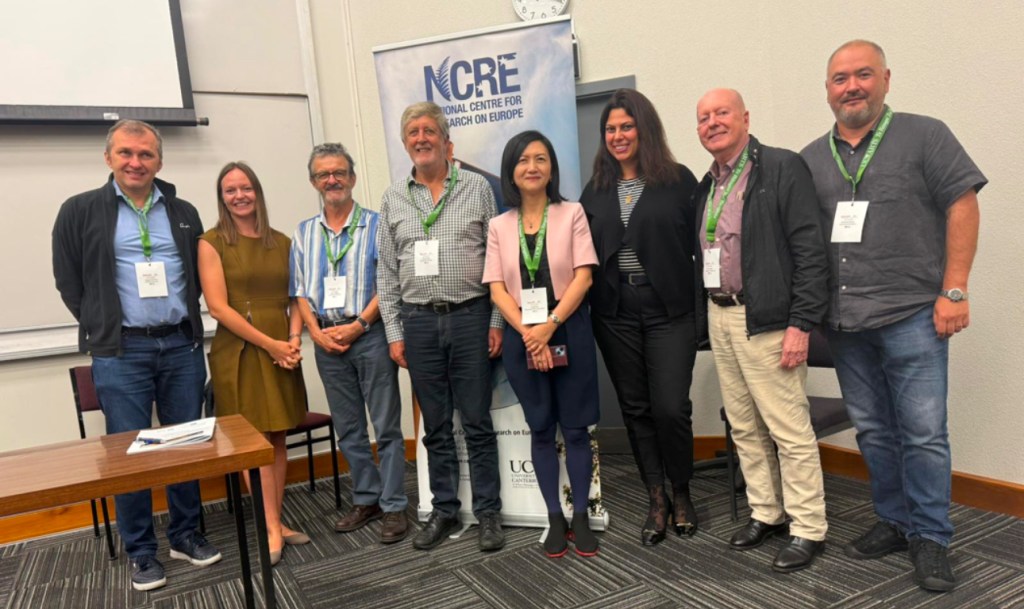
A high-level roundtable discussion, chaired by Associate Professor Fengshi Wu (UNSW Sydney), debated whether a New Cold War is inevitable. Panelists included:
• Professor Emeritus Graeme Gill (University of Sydney)
• Professor Emeritus Leslie Holmes (University of Melbourne)
• Professor Martin Holland (University of Canterbury) The discussion centered on the shifting geopolitical landscape, the role of authoritarianism, and the evolving security architecture in Europe and the Indo-Pacific.
Diverse Panel Discussions
Conference panels covered a broad range of topics, including:
• Resurgent East-West Confrontations – Examining new geopolitical alignments and cultural conflicts.
• Post-Communist Authoritarianism – The evolution of governance models in Russia, China, and Central Asia.
• Migration and Identity – The movement of Eastern European migrants to the Asia-Pacific and their socio-political integration.
• Economic Cooperation in the Indo-Pacific – The role of Central Asia in global economic shifts.
• Media, Literature, and Language in Post-Communist Societies – The impact of soft power and cultural diplomacy in shaping political discourse.
Conference Achievements
1. Successful Merger Announcement: During the AACaPS Executive Committee Meeting, members voted to merge AACaPS and ANZSA into a new entity, Australasian Association for Euro-Asian Studies (AAEAS), marking a new chapter for regional scholarly collaboration.
2. Recognition of Distinguished Scholars: “Professors Graeme Gill and Leslie Holmes were formally nominated for ICCEES Distinguished Scholars Award.
3. Strategic Directions for Future Research: Plans were set in motion for the AAEAS Biennial Conference 2027, to be hosted at Australian National University (ANU), with Kirill Nourzhanov as the convenor.
Conclusion
The AACaPS-ANZSA 2025 Conference provided a critical platform for intellectual exchange, fostering new research collaborations and advancing scholarly debates on contemporary political, economic, and cultural challenges. The discussions underscored the increasing complexities in global politics and the need for interdisciplinary approaches to understanding shifting alliances and divisions.
We extend our gratitude to the organising committee, sponsors, and participants for making this conference a resounding success.
We look forward to reconvening at ANU in 2027 for the next AAEAS Biennial Conference.
Explore the latest publications across various fields and scholarly work by our members.
Stephen Noakes (2024). ‘The shifting nature of transnational civil society in China: What have we learned?’, in Ogawa, A. and Spires, A. (eds.) Varieties of Civil Society Across Asia. Oxfordshire: Routledge.
Stephen Noakes has also begun a new project called ‘The Authoritarian Welfare State’ which examines social policy provision in non-democratic states, including the role of civil society actors.
Natasha Wilson (2024). ‘A New Prague Spring, but from Below?’ Socialist Dissent in the Last Soviet Generation and the Emergence of Solidarność in Poland, 1980–1981’. Contemporary European History, 1–17. https://doi.org/10.1017/S0960777324000092
Leslie Holmes (2024). Rethinking Organised Crime. Cheltenham: Edward Elgar. (this includes much material on post-communist states, especially Russia).
Leslie Holmes (2024). ‘Public Procurement Corruption in Russia’ in Williams-Elegbe, S. and Tillipman, J. (eds.) Routledge Handbook of Public Procurement Corruption. Abingdon: Routledge, 439-56
Raymond Taras (2023). Thucydides’ meditations on fear: contemporary case studies. London: Anthem Press.
Raymond Taras (Ed.) (2024). Exploring Russia’s exceptionalism in international politics. London: Routledge.
Raymond Taras (2024). ‘Security policies in Central and Eastern Europe: on the brink again?’ The Slavonic and East European Review, 102, no. 1, review article, pp. 341-355.
Graeme Gill (Ed.) (2024). ‘Routledge Handbook of Russian Politics and Society’. London: Routledge.
Graeme Gill (2024). ‘Revolution and Terror’. Oxford: Oxford University Press.
Bobir Muratov and Stephen Wilkins (2024). ‘The development of Uzbekistan as a transnational higher education hub: government and institution rationales, and early outcomes’. Journal of Higher Education Policy and Management, https://doi.org/10.1080/1360080X.2024.2324404
Bogdan Mamaev (2024). The Evolution of Authoritarianism and Contentious Action in Russia. Cambridge: Cambridge University Press (Elements in Contentious Politics). https://doi.org/10.1017/9781009560672
AACaPS invites panel and paper proposals for the 17th Biennial Conference to be held at the University of Canterbury, Christchurch, New Zealand on 30-31 January 2025. The event will be hosted by the National Centre for Research on Europe, Faculty of Arts at the University of Canterbury.
Conference Theme: Changing Divisions in Europe and the Asia-Pacific: A New Cold War?
After the collapse of communist rule in the Soviet Union and Central and Eastern Europe in the late 1980s and early 1990s marking the end of the forty-year-long Cold War West-East divisions of Europe and the World, it was largely assumed that the world had entered a new, prosperous era of ideological, political and socio-economic reunification and globalisation. However, more than three decades later the world remains deeply divided.
While some post-communist states, particularly those that were able to anchor their political and economic reform with the process of EU enlargement, have indeed transformed themselves into respectable liberal democracies with functioning market economies, the others have merely replaced the communist dictatorship with another form of authoritarianism. Although they no longer stem from differences over communist ideology, political divisions between the European West and East have not diminished, but only moved further to the East and strengthened in recent years. Putin’s military invasion in Ukraine seems not only to have cemented these divisions for an indefinite period, but to have increased the political confrontation between Russia and Western European states, the USA and NATO to an unprecedented level, which is closer to direct military confrontation and nuclear war than ever was the case during the Cold War.
Further to the east, communist China has also significantly worsened its political relations with Western democracies in recent years, despite extensive trade relations and economic cooperation. The increased assertiveness of Chinese policy in the South China Sea and its continuing support to communist totalitarianism in North Korea and other authoritarian regimes in Asia and the world, including Putin’s Russia, have largely become intolerable for China’s Western partners, regardless of any benefits from mutual economic cooperation. The conference seeks to address these and other developments, divisions, and alignments among and within the communist, post-communist and other states in Europe and the Asia-Pacific region from various angles and disciplines. The conference organisers welcome panel and paper proposals from a broad range of disciplines, including but not limited to political science, history, economics, sociology and cultural, educational or environmental studies.
Submission of Proposals:
Please submit paper abstracts or panel proposals of up to 250 words with your name, title and affiliation to aacapsconference@gmail.comby 10 September 2024. The organisers expect to inform participants of the acceptance of their panel proposals and papers by 30 September 2024.
Important notes:
1) This is an exclusively face-to-face, on campus event with no virtual presentations; the conference aims to foster academic discussion and momentum through extensive live interactions among participants. 2) At the conference, the host will cover morning tea, lunch and afternoon tea on both days. Participants will cover their own travelling and local lodging as well as the conference dinner. 3) We welcome expressions of interest among all participants to serve as panel chairs. Please send your EOI together with your paper/panel proposal submission. 4) Publications: The Authors of selected papers presented at the conference will be invited for publication in special journal issues or an edited book. 5) Two PhD student paper awards will be announced at the end of the conference.
Important dates: Abstract submission deadline – 10 September 2024 Panel and abstract acceptance notification issued – 30 September 2024 Registration deadline for your name to appear in conference program – 10 December 2024
Conference Registration Fees: Standard: NZ$240 AACaPS members and University of Canterbury staff: NZ$200 PG students (non-AACaPS members): NZ$180 PG students (AACaPS members and University of Canterbury students): NZ$140
Conference Programme Committee: A/Professor Fengshi Wu, AACaPS President (University of New South Wales) Dr Milenko Petrovic, Jean Monnet Chair, AACaPS Vice President (University of Canterbury) Emeritus Professor Graeme Gill (University of Sydney) Emeritus Professor Leslie Holmes (University of Melbourne) A/Professor Alexandr Akimov (Griffith University) Dr Anna Taitslin (University of Canberra) Dr Natasha Wilson (University of Melbourne)
War, Peace, and the Post-Pandemic World: Eurasian Perspectives University of New South Wales, Sydney and virtually
1 May 2023
Post-Conference Review
Against the volatile backdrop of Russia’s year-long war in Ukraine, the lingering effects of the Covid-19 global pandemic, and the threat of climate change, more than 60 scholars, veterans and emerging, from Australia, New Zealand and around the world, gathered physically or digitally on 2-3 February at the School of Social Sciences, University of New South Wales, Sydney, to address the vital themes of the conferences. The conference was sponsored by AACaPS (Australasian Association for Communist and Post-Communist Studies), which in March 2022 urged a ‘peaceful resolution’ to Russia’s ‘war of aggression’ on Ukraine. The conference was co-convened by Associate Professor Fengshi Wu, UNSW, and Associate Professor Alexandr Akimov, Griffith University.
As the largest war in Europe since the end of the Second World War raged, with its terrible human toll, ricocheting across the global political and economic system, scholars old and new presented on array of topics that directly or indirectly cast light on the lethal Russian-Ukrainian conflict and/or its ramifications for the vast Eurasian space. Hence the broad geographical and temporal lenses, from China to the European Union and NATO, from pre-Second World War to post-Cold war conflicts and relations. Hence too the breadth of approaches and topics: from literature, geo-politics and economics to security, environmental and cultural considerations and concerns.
Among the highlights were:
An engaging keynote speech on ‘What Political Science Can Learn from Eurasian Studies’, by Professor Pauline Jones, University of Michigan, who persuasively argued that the study of Eurasia provides fertile ground for advancing theory in both comparative politics and international relations.
A special and timely lecture entitled ‘Can Russia afford to be a Superpower, Part 2?’, by Hon. Associate Professor Stephen Fortescue, School of Social Sciences, UNSW, to celebrate his distinguished contribution to AACaPS, and to social science research at UNSW.
Three conference awards presented to outstanding PhD candidate presenters:
‘A shift in claims to legitimacy in Uzbekistan as evidence of authoritarian modernization,’ Akron Avezov, Nagoya University.
‘Changes in attitude to Bolshevism in narratives due to the 2022 Russian invasion of Ukraine,’ Vadym Ilin, Kharkiv National University of Construction and Architecture.
‘The Wrath of China: The Imagination of Sino-West Wars in Contemporary Chinese Science Fiction’,Yimin Xu, UNSW.
The quality and scope of the presentations and the discussions that ensued confirm the importance of AACaPS scholarly mission and bode well for our next biennial conference in 2025.
AACaPS invites panel and paper proposals for the 16th Biennial Conference to be held at the University of New South Wales, Sydney, Australia on 2-3 February 2023. The event will be hosted by the School of Social Sciences, Faculty of Arts, Design and Architecture, University of New South Wales, Sydney.
Conference Theme: War, Peace, and the Post-Pandemic World: Eurasian Perspectives
In many ways, the dominant news themes in 2022 have been the ongoing impact of the Covid-19 pandemic everywhere and the Russian invasion of Ukraine. One focus of this conference will be on how both of these phenomena have impacted the Communist and post-communist societies of Europe and Asia in various ways. But we will also be looking at a much bigger picture – namely, the concepts of war and peace (broadly understood to include, for example, trade conflicts, old and new Cold Wars, culture and soft power competition, etc.) in these regions, as well as contemporary and likely future developments.
The topics can be examined from numerous angles, including the political and economic effects and implications of both wars and pandemics; the continuing rise and the implications of authoritarianism; the ramifications for arts and culture; historical comparisons; changing international allegiances and security patterns; education and public health; sustainable development; and more. In short, while the theme reflects recent developments of the global scale and thus might look somewhat narrow, we welcome presentations that focus on socio-economic, political, educational, cultural, environmental, other public policy topics in the countries of former USSR, Eastern and South-eastern Europe, and Asia whether they are contemporary or historical.
Submission of Proposals:
Please send the following details to aacapsconference@gmail.com 1) name, 2) current institutional affiliation, 3) title/position, 4) postal address and email, 5) title of panel or paper, 6) panel description and/or abstract of paper (200 words or less). Deadline for all proposals is 30 September 2022.
Important notes:
1) We particularly welcome PhD students and Early-Career Researchers from Australasian and overseas universities to attend and present your work at the conference. In-person or virtually. Limited funding might be available to support accepted presenters’ registration and/or travel costs. Further details will be made available in October 2022. 2) At the conference, the host will cover morning tea, lunch and afternoon tea on both days. Participants will cover their own traveling and local lodging. 3) We welcome expressions of interest among all participants to serve as panel chairs and discussants. Please send your EOI together with your paper/panel proposal submission. 4) Publications: Select papers presented at the conference will be invited for publication in special journal issues. 5) Two PhD student paper awards will be announced at the end of the conference. 6) While all panels will be in hybrid mode, we encourage all participants to make the effort and attend in person so that we all enjoy more academic and professional momentum.
Important dates: Abstract submission deadline – 30 September 2022 Panel and abstract acceptance notification issued – 31 October 2022Registration deadline for your name to appear in conference program – 31 December 2022
Conference Registration Fees: Standard – A$150; Concessional – A$100 (current AACaPS members, full-time students); Virtual only – A$50
Conference Academic Committee: Associate Professor Fengshi Wu, UNSW Sydney (convenor); Dr. Alexandr Akimov, Griffith University (convenor); Professor Emeritus Graeme Gill, University of Sydney; Dr. Alexander Korolev, UNSW Sydney; Dr. Nina Markovic, Macquarie University; and, Dr. Sofya Glazunova, Queensland Technology University.
The Jean Monnet Project on Comparative Migration (PROCAM) hosted by Monash University, Melbourne, Australia, analyses the implications of intra- and extra-EU migration in the context of the post-Brexit EU. Australian policy makers have a particular interest in the future development of the EU migration policy, the Single Market and its labour markets after Brexit. This conference aims to address developments in migration, labour mobility, and immigration policy in the European Union and Australia. Key Conference Themes · Labour mobility and immigration policy (Special areas of interest: Asia-Pacific region and Europe) · Climate change and refugees (as part of Development and migration theme) · Comparative Australia – EU migration policy · EU candidate countries and migration · The ‘Brexit effect’ on labour migration, and · Global migration impacts on the Ukraine war.
Conference Details This is a hybrid event (face-to-face and online) that will run from 25 to 26 August, 2022 and be held at Monash Conference Centre, Level 7, 30 Collins Street, Melbourne, 3000 and via Zoom. Please email an abstract of up to 200 words (with a short bio) on one of the key themes to Conference Coordinator, Jessica Quirk at Jess.Quirk@monash.edu Submission deadline:Friday, 15 July 2022. Additional conference information can be found on the Conference website here.
There is a limited funding for domestic travel and accommodation for selected papers.
AACAPS has written to Australian Universities calling for some practical support to students and scholars displaced by war in Ukraine and crackdown on academic freedoms in Russia and Belarus.
We will publish the list of the initiatives on our website as we get to know about them.
CDU has announced a scholarship fund to support students from Ukraine. For further information, please see:
AACAPS is closely following the situation in Ukraine with grave concern. We condemn the war of aggression launched against Ukraine by the Russian government. We urge all parties involved to seek a peaceful resolution to this conflict. In this terrible crisis, our thoughts are with the innocent victims of warfare.

 aacapstudies.com